上锁的房间
Inside Asia’s oldest private library, guarding ancient scrolls in the age of AI_我的网站

A |
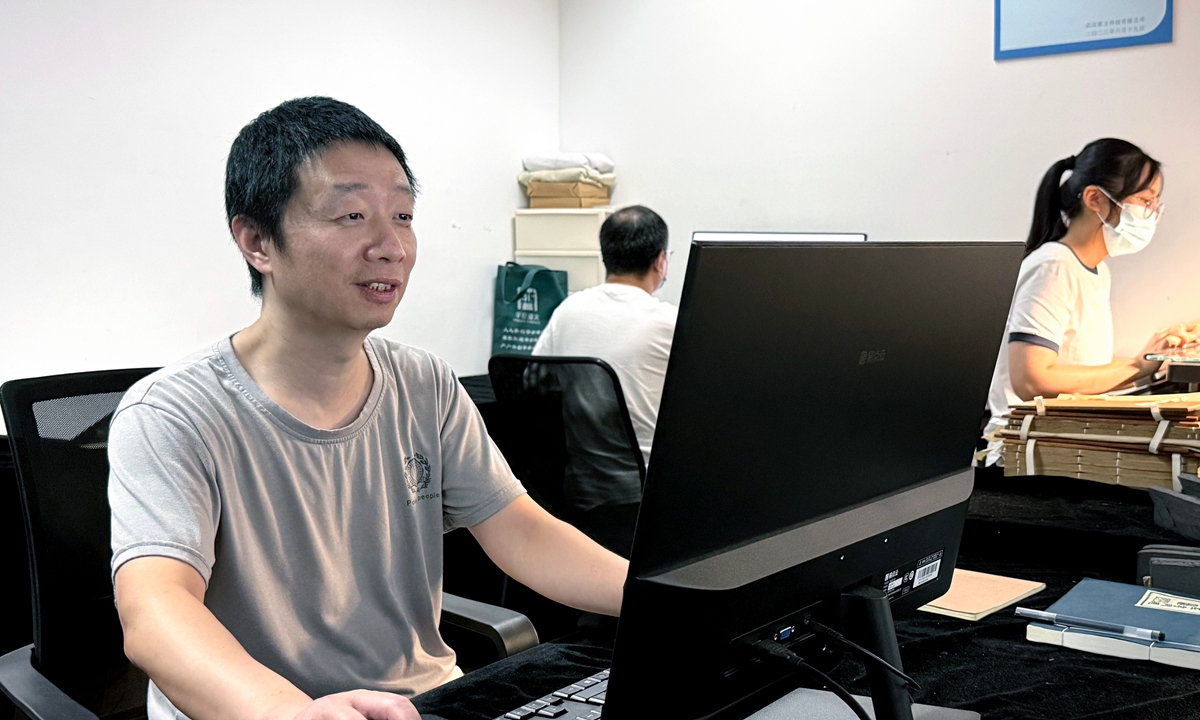
Huang Gang is in his fifties. Every day, he sits before a computer screen at Tianyige Museum (Tianyige), flipping through ancient books - digitally.
As director of the information technology department at Tianyige Museum in Ningbo, East China's Zhejiang Province, home to Asia's oldest surviving private library and one of the world's three oldest remaining family-run libraries, his job title may seem far removed from old books. Yet his work centers on them: converting brittle, thread-bound antique volumes into searchable, zoomable digital files accessible on screen.
For years, Tianyige has carried out digitization in batches guided by its mission: rescue-oriented preservation, scholarly organization and public-oriented outreach. Its teams have scanned more than 3.4 million pages of ancient texts. The institution rolled out its Ancient‑Book Digital Service Platform back in 2009. By 2025, the platform had drawn over 4.6 million total visits.
To outsiders, this might look like a headlong rush into digitization. For Huang and his colleagues, it is delicate work balanced between fast‑evolving artificial intelligence models and the reverence owed to fragile paper relics. "Technology is a tool, ancient books are artifacts, and reading is the ultimate purpose," Huang told the Global Times.
Beyond tech boundaries
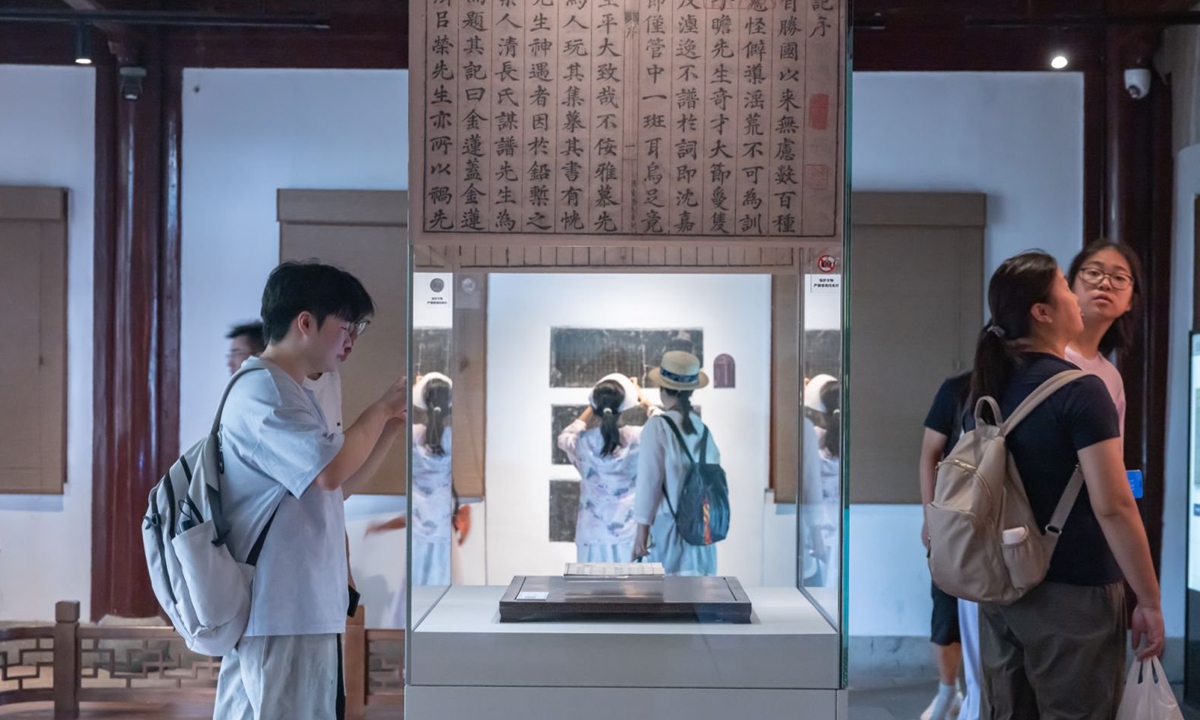
Deep in the storage vaults of Tianyige, tens of thousands of ancient volumes rest in silence. Some pages are curled and fragile; others bear faded script -the accumulated marks of centuries. Vulnerable to aging, wear and external damage, these precious paper relics can hardly sustain long-term repeated manual consultation, making digital preservation an indispensable way to inherit ancient book resources.
Huang's daily work involves leading his team in the digitization of the library's entire collection of ancient books, paintings and cultural relics, bringing rare treasures out of the shadows and into public view.
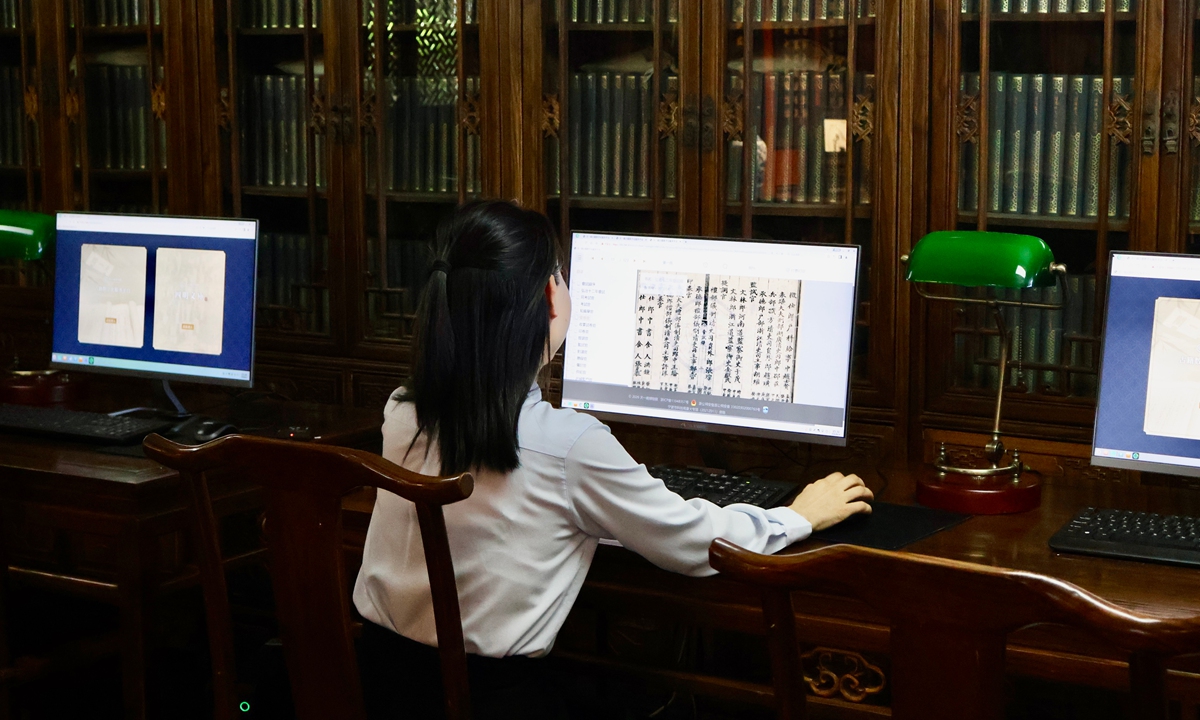
AI now serves as a core auxiliary tool for ancient-book digitization and research. Huang's group initially built character-recognition frameworks based on optical-character-recognition technology. By cross-checking outputs across different models, ancient Chinese characters, damaged script and blurry handwriting.
According to Zhejiang Daily, by August 2025, the Tianyige's digital platform had added over 3,700 new digitized book sets, lifting its total digital holdings past 20,000 volumes.
Digitization is never a purely technical exercise; in-depth scholarly expertise in ancient texts remains indispensable. Huang frequently collaborates with Zhao Xuteng, a museum librarian specializing in classical literature. Zhao is responsible for selecting which volumes to digitize, evaluating editions, studying content, and identifying works of significant academic or public value. While one team focuses on the technical execution, another digs deep into the textual substance, ensuring that cold digital capture remains faithful to the historical and bibliographic logic of the originals.
Staying true to reading
When he is not writing code, Huang keeps asking one fundamental question: What should technology actually do for people? "All technology ultimately serves the act of reading itself," he said. "It can never replace that."
With the rapid rise of large language models, demand for high-quality text corpora has surged. Overseas, some AI companies have reportedly purchased millions of printed books in bulk, scanned them and then shredded the originals.
"Machines can efficiently compile documents, retrieve sources and generate explanatory notes. Real engagement with ancient texts, however, is far more than mechanical assembly of characters," Huang noted.
Both Huang and Zhao stressed that human beings sit at the heart of cultural inheritance. People absorb wisdom from old texts, draw on personal experience and scholarship to reflect, and produce new knowledge - an intellectual process no AI can fully replicate.
The Global Times learned that every digitization workflow at Tianyige follows strict closed-loop protocols: collection checkout logging, noncontact scanning, AI-powered quality checks, precise image stitching and compliant online publication. The full procedure minimizes physical wear on original artifacts.
"A book is, first and foremost, a cultural relic that carries a thousand-year legacy," Huang said. "Only secondarily is it a text to be read." That principle, he added, is shared by all guardians at Tianyige.
"Media change, technologies evolve, but the essence of reading has never changed," he stressed.
Today, drawing on its comprehensive digital collections, Tianyige hosts monthly exhibitions of rare texts and organizes family reading events where parents and children explore the classics together. For Huang and his colleagues, the most gratifying reward is watching more and more ordinary people develop a love for ancient reading and a deeper appreciation for the traditional Chinese culture.
In an era swept by artificial intelligence, Tianyige's guardians tend to fragile paper relics while leveraging modern technology, preserving the genuine power of reading. More than 450 years of scholarly heritage flows onward, passing between human fingertips and glowing digital screens.
。

B |

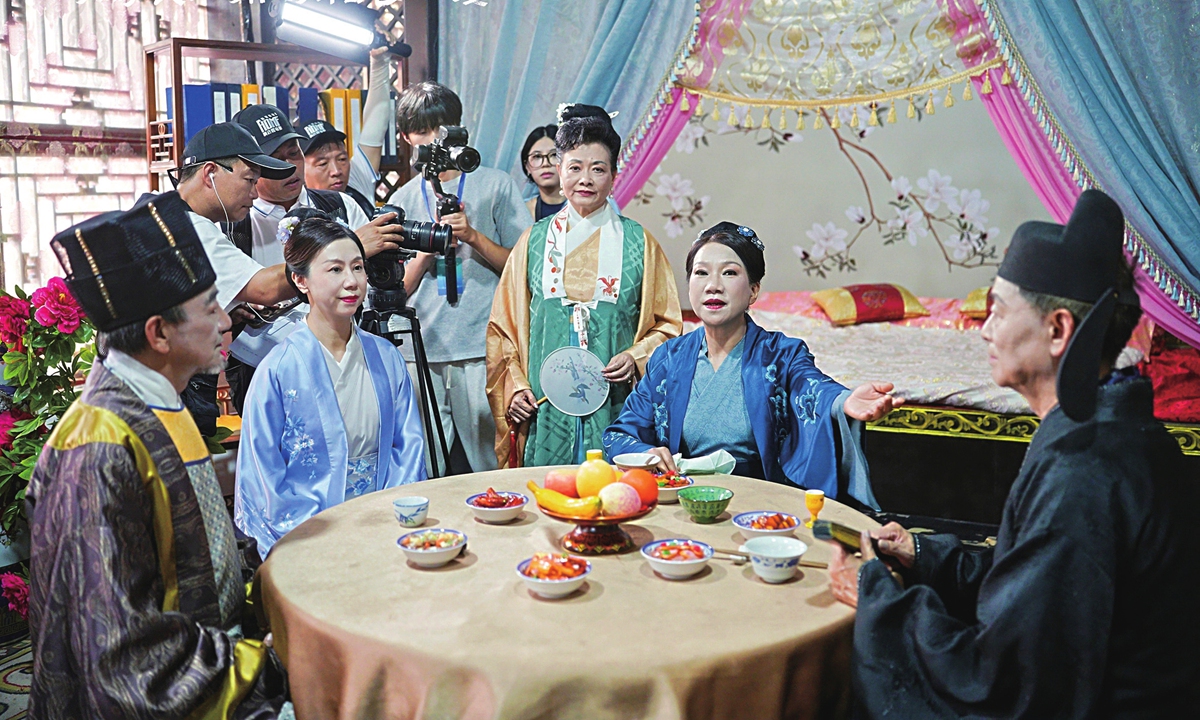
Wu's unexpected debut was made possible by a short drama experience program launched by Hengdian World Studios, one of China's largest film and television production bases, in Jinhua, East China's Zhejiang Province. Designed for ordinary visitors rather than professional actors, the program allows tourists to put on costumes, choose scripts, step in front of cameras and receive a professionally edited short video as a "souvenir."
For several hundred yuan, participants complete the entire process - from styling and filming to post-production - and walk away with a one- or two-minute clip in which they become the protagonist of their own story.
According to representatives of the program, a version of the hit TV drama Zhenhuan Zhuan, or Empresses in the Palace, featuring a group of middle-aged and elderly women went viral and garnered more than 1 million views less than 15 minutes after the video was released in September 2022, drawing widespread attention to the trend of ordinary people trying their hand at acting. Today, such experiences have expanded to more visitors, with senior tourists becoming one of the program's key participants.
"This is not an isolated phenomenon limited to one film base," Zhang Yi, CEO of market research firm iiMedia, told the Global Times. He said the trend has grown amid a downturn in the film and television industry, where the shift of production bases across China from "serving only professional crews" to "serving ordinary people" has converged with the rise of new silver economy consumption trends.
At the same time, the trend provides a new direction in the development of the silver economy: Elderly consumers are increasingly seeking experiences that provide enjoyment, self-expression and social connection, Zhang said.
From outsiders to insiders
Hengdian microfilm project director Zhang Jinquan told the Global Times that during this year's summer season, his team has received dozens of visitors every day, with the number sometimes reaching more than 100 during peak periods. Elderly visitors make up a large proportion of participants.
"We hope people can experience the fun of film and television," Zhang said, adding that the team provides a full range of services, including costume design, script selection and acting guidance.
For Wu's daughter, however, her mother's decision to "go shoot a movie" initially came as a surprise.
Many of her old friends who sang and hung out with her had gradually lost touch for various reasons. When I came home from work, I could see she often felt lonely."
Wu is among a growing number of older people who are stepping into studios and transforming themselves from audiences into performers. For many retirees, the experience is not simply about making a video; it is a chance to rediscover confidence, creativity and social interaction.
According to Zhang Jinquan, elderly participants often choose historical costume scripts, with many showing unexpected talent after receiving professional coaching.
"When we opened these projects to the public, we believed that the film industry itself was changing," Zhang Jinquan said.
"With the rise of micro dramas and AI-generated short dramas, filmmaking is no longer something distant and unreachable. Ordinary people can also participate and experience it."
"When choosing experiential activities such as short drama shoots and traditional-style photo sessions, middle-aged and elderly tourists tend to place greater emphasis on cultural depth, a sense of ceremony, nostalgia and quality experiences. They are particularly drawn to the value of fulfilling long-held dreams, creating meaningful memories and sharing their experiences with others," another representative from the studios told the Global Times.
The popularity of these programs also reflects a broader change in elderly consumption patterns. Zhang Yi said that traditional senior consumption was once largely centered around tourism, healthcare products and daily necessities. Now, more elderly consumers are willing to pay for interests, emotional value and meaningful experiences.
Beyond acting in Hengdian, other forms of experience-based consumption, including ancient-Chinese-style photography, senior study tours, and cultural workshops are gaining popularity among the older generations.
In June, 150 elderly participants traveled to the Ancient City of Ping Yao in North China's Shanxi Province for an immersive cultural study program. Instead of simply visiting historical sites, they combined online learning with on-site practice, conducting poetry recitations in ancient streets, studying Shanxi merchant culture at exhibition halls and creating their own works with guidance from professional art instructors, as reported by cnr.com.
Hengdian World Studios has also introduced study tour programs such as "Learning history through film and television" to better meet the diverse needs of senior visitors.
Such activities show that senior tourism is evolving from simple sightseeing into a combination of learning, participation and personal expression, Zhang said.
In fact, China's experience economy among the older generation is receiving policy support. China's Ministry of Civil Affairs, the Publicity Department of the Communist Party of China Central Committee and 10 other departments have launched the "Enjoy your silver age" campaign, focusing on areas including elderly cultural activities, creative industries and social engagement to encourage new consumption opportunities for seniors.
According to estimates from multiple institutions, China's silver economy has already approached 10 trillion yuan ($1.48 trillion) in scale and is expected to reach around 30 trillion yuan by 2035, accounting for roughly 10 percent of the country's GDP. Sectors including elderly finance, smart healthcare, senior education and tourism-based wellness are expected to become major growth areas, according to a report from people.cn.
The report pointed out that against this background, precisely catering to the needs of seniors has become a key focus. For industry observers, the next challenge is how to better understand the emotional and social needs of older consumers.
Zhang Yi noted that the future of the silver economy is not only about providing care, but also about creating products and experiences that allow seniors to pursue their interests, express themselves and build connections.
。
Current article:http://mvnd.qiuergejiaolaiaozhuangshi.buzz/41byjp/pq39ya3.html
Published on:01:51:22


